
Inflatables
Winter Storage Guide for Commercial Inflatables: Protect Your Fleet Off-Season
Why Off-Season Storage Is a Fleet Investment, Not a Chore
A commercial bounce house costs $3,000–$8,000. A water slide combo can run north of $12,000. Yet every winter, rental operators lose units to mold, rodent damage, and vinyl cracking — all preventable with a proper storage protocol. The math is simple: a few hours of prep per unit now saves you thousands in replacement costs next spring.
Operators who follow a structured winter inflatable care routine report 30–40% longer unit lifespans compared to those who just deflate, fold, and forget. This guide gives you the exact checklist experienced fleet managers use.
Pre-Storage Preparation Protocol
Deep Clean and Dry — The 48-Hour Rule
Before anything goes into storage, you need to clean your bounce house thoroughly before storage. Use a mild detergent (dish soap works) and a soft-bristle brush. Hit every seam, every crevice, every D-ring pocket where dirt collects. Rinse completely — soap residue attracts moisture and accelerates mold growth.
Here is the critical part: the 48-hour drying rule. After washing, inflate the unit fully and let it air-dry for a minimum of 48 hours. In humid climates, extend that to 72 hours. Use fans to circulate air across the surface. Flip or rotate the unit halfway through so both sides dry evenly. If you fold a unit that is even slightly damp, you are inviting mold — and mold in storage spreads fast.
- Wash with mild detergent and soft brush — no pressure washers on seams
- Rinse thoroughly to remove all soap residue
- Inflate fully and air-dry 48–72 hours depending on humidity
- Use box fans or industrial fans to speed drying
- Check seam pockets and tube interiors by hand before folding
Inspect and Repair Before You Fold
Storage is not the time to ignore small problems. A 2-inch tear that is easy to fix now will become a 12-inch blowout after six months of pressure from folding. Walk every unit while inflated and patch any tears before folding — especially on high-use inflatable bouncers and combo units. Check stitching along high-stress zones: entry ramps, climbing walls, and slide seams.
For water-specific units, inspect slide surfaces for delamination and keep a water slide repair kit on hand. Mark any spots that need professional repair with blue painter's tape so you can address them before spring deployment.
How to Deflate and Fold Commercial Inflatables
Bounce Houses and Combos
Disconnect the blower and open all deflation zippers and flaps. Let the unit deflate naturally for 15–20 minutes — do not walk on it to force air out, as this stresses seams. Once flat, fold the walls inward toward the center of the jump area. Then fold the entire unit in thirds lengthwise, rolling from the end opposite the air tubes to push remaining air out. Secure with nylon straps, not bungee cords (bungees create pressure points that can crease vinyl permanently).
Water Slides and Water Park Components
Water slides need extra attention because their complex shapes trap moisture in pool basins and splash zones. After full deflation, tilt pool sections to drain any residual water. Fold slide lanes flat first, then fold the climbing section down over the slide. For units over 30 feet, fold in sections rather than trying to manage the entire length at once. Two people minimum for anything over 20 feet.
Obstacle Courses and Large-Format Units
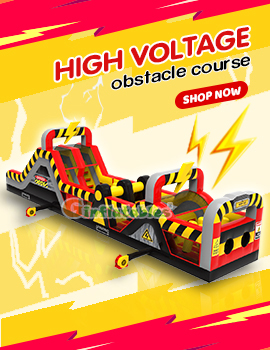
Large obstacle courses (40–100+ feet) should be folded in accordion style — fold every 8–10 feet back on itself, keeping internal baffles aligned. This prevents the fabric from bunching unevenly, which creates permanent creases in commercial-grade PVC. Label the blower-connection end with a tag so setup crews know which end goes where in spring.
Warehouse Environment Requirements
Temperature, Humidity, and Ventilation
Your storage environment matters more than your folding technique. The ideal warehouse conditions for commercial inflatable storage are:
- Temperature: 50–77°F (10–25°C) — avoid unheated garages in freeze zones, as PVC becomes brittle below 32°F
- Relative humidity: 30–50% — use a dehumidifier if your space runs higher
- Ventilation: Continuous air circulation, even low-volume, prevents moisture pockets
- Direct sunlight: Zero — UV degrades vinyl and fades printed graphics
Remember that PVC and Oxford cloth respond differently to humidity. PVC tolerates slightly higher humidity but cracks in freezing temps. Oxford cloth (common in smaller residential-grade units some operators carry) absorbs moisture more readily and needs stricter humidity control.
Pest and Rodent Prevention
Mice and rats will nest inside folded inflatables — the fabric retains warmth and the enclosed space feels safe to them. The damage they cause is devastating: chewed vinyl, urine staining, and nesting material embedded in seams.
- Elevate all units off the floor on pallets or shelving (minimum 6 inches)
- Place rodent deterrent stations around the perimeter — never inside the folds
- Seal warehouse entry points: door sweeps, vent screens, pipe penetrations
- Avoid storing food, cardboard, or paper products in the same space
Mold Prevention — The Biggest Storage Risk
Mold is the number-one destroyer of stored inflatables. It starts as a faint musty smell and progresses to visible black or green patches that are nearly impossible to fully remove from commercial vinyl. Once mold penetrates seam stitching, the unit is compromised.
Prevention comes down to three factors: the unit must be bone-dry before folding, the storage environment must stay below 50% humidity, and air must circulate. If you store more than 10 units, invest in a commercial dehumidifier rated for your square footage. A $300 dehumidifier protects tens of thousands of dollars in inventory.
For extra protection, place silica gel desiccant packs (the large industrial type, not the small packets from shoe boxes) inside each folded unit. Use 2–3 packs per unit for standard bounce houses, more for larger slides and obstacle courses. Replace or recharge them mid-winter if your storage period exceeds four months.
Storage Systems: Shelving, Bags, and Labeling
Stacking folded inflatables directly on top of each other compresses the bottom units and creates moisture traps. Use industrial shelving rated for heavy loads — a folded commercial bounce house weighs 200–400 lbs, and a large water slide can exceed 700 lbs.
- Shelving: Heavy-duty steel pallet racking with slatted or wire-mesh decks for airflow
- Bags: Breathable vinyl storage bags or mesh tarps — never sealed plastic, which traps moisture
- Labeling: Tag each unit with name, size, last inspection date, and any pending repairs
- Blowers: Store blowers separately with proper maintenance. For inflatable water slides with integrated pool basins, pay extra attention to draining all standing water before folding — clean filters, check cords, and keep them on shelving away from floor moisture
A simple spreadsheet or inventory app that tracks each unit's storage location, condition, and maintenance history pays for itself when you are pulling 30 units out for spring season.
Pre-Season Recommissioning Checklist
When it is time to bring your fleet back online, do not skip the recommissioning inspection. Every unit should go through this before its first rental of the season:
- Unpack and visually inspect all surfaces for mold, discoloration, or pest damage
- Inflate fully and check for air leaks — listen and feel along every seam
- Re-clean with mild disinfectant, even if the unit looks spotless
- Inspect all anchor points, D-rings, and tie-down straps
- Test blowers: check amperage draw, listen for bearing noise, inspect power cords
- Verify safety netting and entrance flaps are intact
- Update your inventory records with current unit condition
Proper winter storage is not glamorous work, but it is the single most cost-effective maintenance task in the rental business. Follow this protocol consistently and your fleet will deliver reliable revenue season after season.
Ready to Add This to Your Fleet?
Ginflatables builds commercial-grade inflatables to spec for rental operators and event businesses.