

Inflatables
How Much Water Does a Water Slide Use? Plus 6 More Commercial Buyer FAQs
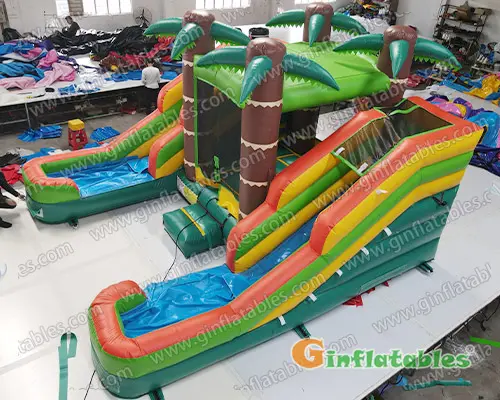
Inflatable water slides are the highest-demand wet attraction in most rental fleets: quick to set up, cheap to run once you own them, and bookable all summer. Below are the questions operators and first-time buyers ask most often, answered with the practical numbers you need for setup, water supply, drainage and upkeep. Out on a lawn or a hard-surface event site, a blow up water slide is still the unit that anchors the whole booking.
1. What does the air blower do in an inflatable water slide?
Commercial water slides are constant-airflow products, not sealed inflatables. The air blower runs the entire time the unit is in use, replacing the air that escapes through seams and stitch lines by design. That is why a slide needs continuous mains power at the setup point, and why blower sizing matters: a full-size commercial water slide typically needs 1.5–2 HP and 1,200–1,600 CFM, and larger dual-lane units are built for two blowers.
If a slide never reaches full shape, or softens after half an hour, the air supply is the first thing to check rather than the fabric — our leak diagnosis playbook for slides that will not hold air works through the sequence.
2. Can an inflatable water slide recycle water?
The blower only keeps the unit inflated — it does no water handling at all. Recirculation is a separate add-on kit: a submersible pump sits in the splash pool and returns collected water to the top of the slide. It is worth adding if you run the same unit repeatedly through a season, in metered-water regions, or at venues where hose access is awkward. For one-off weekend rentals with easy mains water, a plain hose feed is simpler and there is less to fail on site.
3. How much water does a water slide use?
Feed comes from a standard garden hose connection. Expect roughly 8–12 gallons per minute (30–45 litres) while the spray bar is running at full flow. Once the lane surface and splash pool are properly wet, you can throttle the flow back substantially — the slide only needs enough water to keep the lane slick, not a continuous fill. Operators who set the flow once at the start and leave it wide open all day use several times more water than necessary.
4. How do you get the water out of the slide?
- Tip while inflated. With the unit still up, tilt the splash pool to drain it. This is a two-person job on any full-size unit — do not attempt it alone.
- Deflate and drain. Shut off the blower and let the pool empty as the walls come down, guiding water away from the packing area.
- Re-inflate to dry. Once the water is out, inflate again and let the unit air-dry fully before rolling.
That last step is the one that gets skipped, and it is the single biggest driver of premature fleet replacement. A slide rolled damp grows mould inside the chambers within days. If it has already happened, the mould removal procedure and the cleaning products that will not damage PVC are covered in our guide to cleaning an inflatable water slide and removing mould.
5. What does an inflatable water slide for sale cost to own, and how does that compare to water slide rental pricing?
Purchase cost varies with size, lane count and material grade, but the number that matters commercially is cost per rental day. A commercial-grade unit built from heavy PVC tarpaulin with reinforced stress points and double-stitched load seams will typically pay for itself within a season or two of steady bookings, then keep earning for years with routine care. A cheaper, lighter unit rents for the same price and gets retired far sooner — which makes fabric weight and seam construction the real economics of the decision, not the sticker. Compare specifications across full slides and wet/dry water combo units on that basis. Water slide rental pricing on the customer-facing side is a separate question from what you pay to acquire the unit — it should reflect setup labor, water/power access, and seasonal demand at your market, not just amortizing the purchase price over a season.
6. How long does setup take, and what does the site need?
Two crew can have a mid-size slide up in 20–30 minutes on grass: unroll, connect the blower, inflate, stake down, then connect water. Site requirements are consistent: level ground with a clear footprint plus a 2 m perimeter, no sprinkler heads or sharp debris, mains power within reach of the blower, hose access, and somewhere for splash-pool water to drain away from the setup. On hard surfaces you swap stakes for ballast — sandbags on every anchor point, not just the corners. If you are staging a slide as one attraction inside a bigger layout, our guide to setting up a full inflatable water park works through the same power, water-line and drainage planning across a whole multi-unit footprint rather than a single slide.
7. What maintenance does a slide actually need?
- Every use: rinse off grass and grit, check for new tears, confirm all anchor points are intact.
- Every takedown: dry completely before rolling. No exceptions.
- Monthly in season: inspect load-bearing seams and stitching, especially at wall-to-floor junctions and around water connections.
- As needed: patch small punctures promptly — see our step-by-step slide patch and seam repair guide for adhesive selection and cure times before the unit goes back out.
Ready to Add This to Your Fleet?
Ginflatables builds commercial-grade inflatables to spec for rental operators and event businesses.