
Inflatables
Which Inflatables Pay Back Fastest? A Category-by-Category ROI Ranking
Payback Speed Is Not the Same Question as ROI
Total ROI over an equipment's lifespan and how fast it pays back the initial purchase are related but different questions, and operators building out a fleet with limited starting capital should optimize for the second one first. A unit with excellent lifetime ROI but a two-season payback window ties up cash longer than a lower-ceiling unit that recovers its cost in a handful of weekends. For a first or second fleet purchase, payback speed determines how quickly that capital frees up to buy the next unit — which is what actually compounds fleet growth.
What Actually Drives Fast Payback
Three variables determine how quickly a unit recovers its purchase cost, and the categories that pay back fastest tend to score well on all three at once:
- Unit cost relative to booking rate. A low-cost unit that commands a respectable rental rate recovers cost in fewer bookings than an expensive unit charging a proportionally similar rate.
- Booking frequency. A unit that books every weekend pays back faster than one that books occasionally, even if the occasional booking commands a premium price.
- Setup and labor overhead per booking. Units that one person can deliver, set up, and strike quickly generate more net revenue per booking than units requiring a larger crew or longer setup window, which effectively speeds up payback by keeping labor cost from eating into each booking's margin.
Category-by-Category Ranking
This ranking reflects typical payback speed for a first or early unit in that category, not lifetime ROI ceiling — some categories further down this list have a higher total ROI ceiling once a fleet is established, they just take longer to get there on unit one.
- Standard bounce houses. The fastest payback in the category, and usually the first purchase for a reason: low unit cost, near-universal booking demand across birthday parties and school events, one-person setup in under 20 minutes. High booking frequency is what makes this category the foundation most fleets are built on.
- Bounce house combo units (slide + bounce). Higher unit cost than a standard bouncer but commands a meaningfully higher rental rate for a similar booking frequency, which usually shortens payback relative to unit cost even though the absolute purchase price is higher.
- Slip and slides. Low unit cost and a compact storage footprint keep the capital outlay small, and demand holds up well through the full warm season. Our slip and slide combo guide covers the throughput math that pushes payback even faster on combo-platform units.
- Standard inflatable water slides. Strong booking frequency in-season and a rental rate premium over dry units, but the season length caps how many bookings a unit gets before winter storage, which stretches payback slightly longer than the dry categories above it.
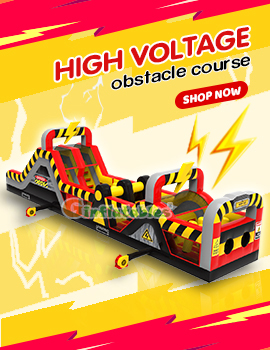
- Obstacle courses. Higher unit cost and typically a two-person setup crew narrow the margin per booking compared to a bounce house, which pushes payback out further even though the rental rate is higher — the category earns its keep on booking premium rather than payback speed.
- Mechanical rides (bull, surfboard simulators). The highest unit cost on this list by a wide margin, but the rental rate premium is proportionally even higher for event bookings willing to pay for a standout attraction. Payback takes longer in absolute time, but the category often has the highest ceiling once that initial cost clears — see our mechanical bull cost and ROI guide for the full breakdown.
- Wedding and premium niche equipment. Booking frequency is the limiting factor here, not price — a white bounce house or ceremony arch commands a strong rate but books far less often than general-purpose equipment. Payback is the slowest on this list unless the unit doubles as standard rental inventory in its off-season, which is why our wedding inflatables guide recommends exactly that dual-use approach for a first wedding-category purchase.
Why This Ranking Should Inform Purchase Order, Not Just Category Choice
Fleet-building operators often ask which category to add next rather than which order to add categories in, and the order matters more than it seems. Buying a mechanical ride or premium niche unit before establishing a base of fast-payback bounce houses and slides means a longer stretch with capital tied up before the fleet generates enough cash flow to reinvest. Our new operator starter fleet guide covers the recommended build order in more detail — the short version is that fast-payback categories fund the purchase of slower-payback, higher-ceiling equipment later, not the other way around.
Where Buy-vs-Rent Changes the Math
For categories at the slow end of this ranking — mechanical rides and premium niche units especially — the payback question sometimes has a better answer than "buy slower-paying equipment anyway": rent the equipment for early bookings while demand is unproven, then buy once booking frequency justifies the capital outlay. Our buying vs renting vs leasing guide covers exactly this decision point, which changes the payback calculation entirely since there's no upfront capital to recover in the first place.
Ready to Add This to Your Fleet?
Ginflatables builds a full inflatable rental fleet to commercial-grade specs for rental operators and event businesses.
Get a QuoteWhatsApp