
Inflatables
Can You Put a Bounce House on Concrete? Setup Rules for Driveways, Gyms & Parking Lots
A bounce house on a driveway or a gym floor is one of the most common setup requests rental operators get, and it's also one of the most misunderstood. Concrete, asphalt, and gym flooring can't be staked like grass, so the anchoring method changes completely — and getting it wrong is how units end up sliding, tipping, or flying in a wind gust.
Yes, concrete works — with a different anchor system
A bounce house on concrete is safe and common, but it cannot rely on ground stakes, which is the default anchoring method on grass. Concrete, asphalt, pavers, and gym floors all require weighted or strapped anchor points instead: sandbags, water barrels, or ratchet-strap tie-downs to fixed structural points. The unit itself doesn't care what surface it sits on — the anchoring system does all the work of keeping it in place.
The most common commercial approach is a sandbag or water-barrel anchor at each corner (and at mid-span points for larger units), sized to the same wind-load rating the unit would need with stakes. A rule of thumb many operators use: match or exceed the combined weight rating you'd get from 12-18 inch stakes in firm soil, which for most 13x13 to 15x15 ft units means 40-50 lbs of ballast per anchor point in moderate conditions, more in open, wind-exposed lots.
Driveway setups: slope, surface, and heat
Residential driveways introduce two problems ground rentals rarely face: slope and surface temperature. A driveway with more than a few degrees of grade needs the unit's low side ballasted heavier to counteract the tendency to creep downhill under rider motion, and steep driveways may not be suitable at all — check your operation's maximum grade policy before booking a sloped site sight unseen. Surface temperature matters too: dark asphalt on a hot afternoon can reach well over 140°F, which softens PVC seams and creates a burn risk for bare feet at the entrance ramp. A ground tarp under the unit isn't optional on asphalt in summer — it protects both the material and the riders.
Indoor gym and event-hall floors
Gyms, banquet halls, and convention floors are the strictest concrete-adjacent surface: venues almost universally prohibit stakes (obviously) and often restrict or ban sandbags too, out of concern for floor damage or leaks. The standard solution is a low-profile weighted anchor plate or venue-approved tie-down point — many gyms have embedded floor anchors or basketball-standard sleeves that double as legal tie-off points. Confirm this with the venue days before the event, not on setup morning; "no stakes allowed" is common knowledge, but "no sandbags allowed either" catches operators off guard more often.
Parking lots: the wind variable
Open parking lots combine a hard surface with the least wind protection of any common venue type — no fence line, no adjacent buildings, no tree cover. This is where anchor sizing matters most and where operators most often under-ballast because the surface felt "fine" on a calm setup morning. Check the wind forecast for the full rental window, not just setup time, and follow your posted maximum operating wind speed regardless of surface — a well-anchored unit on concrete still has to come down in a serious gust, the same as one staked into grass. For the full weight-rating and wind-threshold framework across surface types, see our guide on how to anchor an inflatable for wind safety.
Not every unit is a good fit for hard-surface bookings
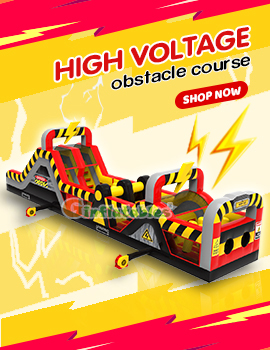
Beyond anchoring method, some units handle concrete and gym floors better than others by design. Larger obstacle courses and multi-lane combo units generate more dynamic load — riders running, jumping, and shifting weight across a bigger footprint — which means they need proportionally more ballast per anchor point than a standard bounce house of similar square footage. If your fleet includes both compact units and larger combo pieces, it's worth flagging which ones are approved for hard-surface bookings in your internal catalog, rather than leaving that judgment call to whichever crew member takes the booking call. A unit with a low, wide base and fewer vertical elements (turrets, tall obstacle towers) is inherently more stable on a hard, unstaked surface than a tall, narrow one — factor that into which units you offer for driveway and gym rentals versus which stay grass-only.
Water-integrated units add a further complication on hard surfaces: standing water runoff on concrete or asphalt creates a slip hazard well beyond the unit's own footprint, and gym floors in particular should never host a wet unit regardless of anchor method. Keep wet and dry unit policies separate in your hard-surface booking rules.
Insurance and liability notes for hard surfaces
Some liability policies and municipal event permits specifically ask how a unit will be anchored, and "sandbags on concrete" is a standard, insurable answer as long as the ballast weight is documented and matches your policy's stated method. What insurers and permit reviewers actually want to see is consistency: the same anchor-weight standard applied every time a unit goes on a hard surface, not an ad-hoc judgment call made on-site. Keep a simple reference table of ballast weight by unit size and surface type in your crew's paperwork, and note the anchor method used on the delivery record for every hard-surface booking — it's the first thing an insurer or venue asks for if an incident review ever happens, and having it on file takes minutes now versus a liability headache later.
What changes in your setup checklist
Moving from a grass-default checklist to a hard-surface checklist means swapping four things: bring ballast (sandbags or water barrels) instead of assuming stakes will work, bring a ground tarp for any asphalt or sun-exposed concrete, confirm the venue's anchor policy in advance for indoor bookings, and re-check the wind forecast since hard-surface sites are more often open and exposed than a fenced backyard. None of this changes which bounce house units you can book on concrete — it changes how you secure them once they're there.
Weight capacity is a separate question from anchoring, but the two interact: a unit rated for a higher rider count also needs proportionally heavier ballast to stay controlled under that load. Cross-check your unit's rated capacity in our Bounce House Weight Limit & Capacity Guide before finalizing the anchor plan for a large concrete or gym booking.
Once ballast, surface protection, and venue clearance are confirmed, a concrete, driveway, or indoor setup is no riskier than a standard grass rental — it just runs on a different checklist, and that checklist needs to live in your crew's setup routine, not get improvised on site.
Ready to Add This to Your Fleet?
Ginflatables builds commercial-grade inflatables to spec for rental operators and event businesses.