

Inflatables
Adult Blow Up Water Slides: What Commercial Buyers Need to Know
A kids' water slide at an adult corporate event is a liability waiting to happen. The lanes are too narrow, the weight ratings are too low, and the first 200-pound rider will stress every seam on the unit. Adult blow up water slides are built to a different standard — and if you're buying for a rental fleet or event operation, knowing that standard saves you money and insurance headaches.
Here's what separates adult-grade inflatable water slides from everything else on the market, and exactly what to look for before you place an order.
What Makes a Water Slide "Adult-Grade"?
The difference isn't just height. An adult inflatable water slide is engineered around three variables that kids' units don't need to handle:
Weight capacity. Most kids' slides top out at 150–200 lbs per rider. Adult-rated units start at 300 lbs per rider and go up to 500 lbs for commercial-grade models. This isn't just about one rider — it's about multiple adults on the slide, climbing wall, and splash pool at the same time. Total load capacity should be 800–1,500 lbs depending on unit size.
Lane width. Standard kids' lanes run 24–30 inches. Adults need 36–42 inches minimum for shoulders and safe sliding posture. Narrow lanes lead to friction burns and stuck riders — both bad for your business.
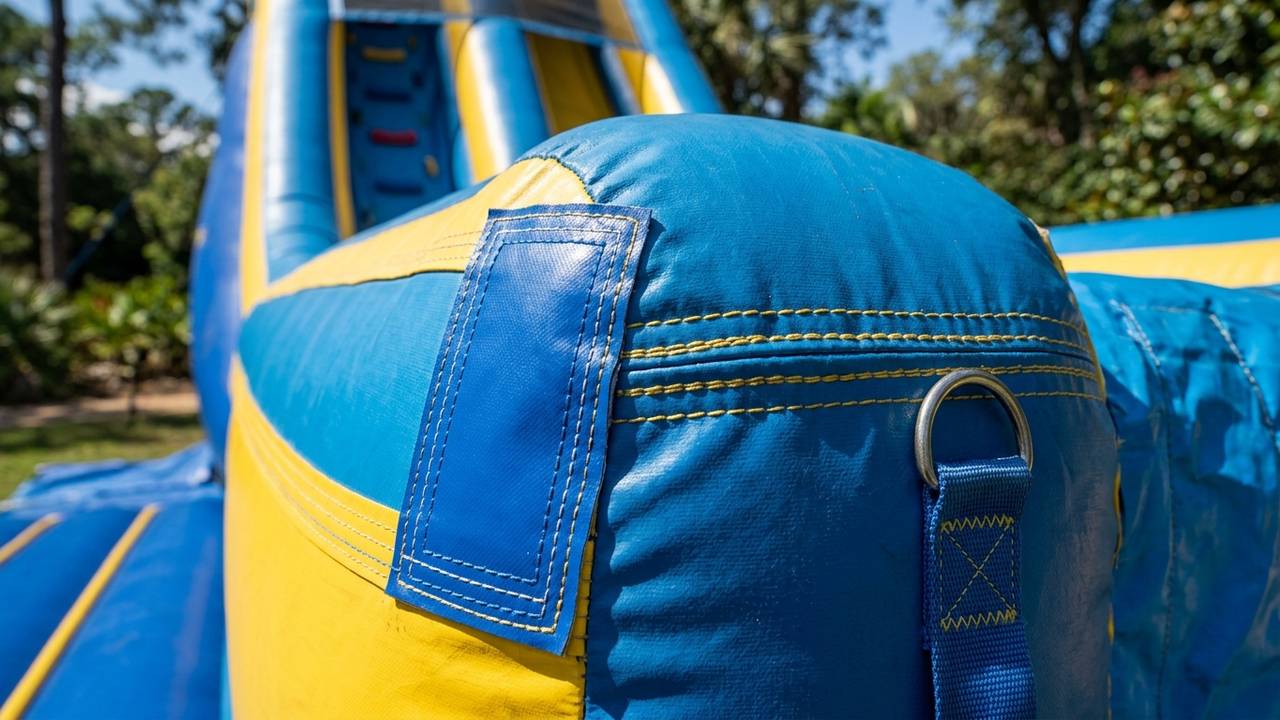
Structural reinforcement. Adult units use double or triple stitching at stress points, reinforced baffles, and heavier-gauge material. If a slide spec sheet doesn't mention reinforcement details, that's a red flag.
Size Categories and Best Use Cases
Adult blow up water slides generally fall into four size brackets. Each fits different event types and site constraints:
18–22 ft slides. The entry point for adult use. Suitable for backyard rentals, smaller corporate events, and pool parties. Footprint: roughly 35×15 ft including the splash zone. These handle 2–3 adult riders cycling through at a time.
25–30 ft slides. The sweet spot for most rental operations. Tall enough to feel thrilling, manageable enough for a two-person setup crew. Footprint: 45×20 ft. Popular for company picnics, church festivals, and community events.
35–45 ft slides. Event-level units for festivals, water parks, and large-scale rentals. These often feature dual lanes or integrated obstacle sections. Footprint: 60×25 ft or larger. Require a flat, open site and typically 2–3 commercial blowers.
50–60 ft slides. The flagship units. A 60 ft water slide is a headliner attraction — it draws crowds and justifies premium rental pricing ($800–$1,500 per day in most US markets). Footprint: 75×30 ft minimum. Setup requires 3–4 crew and 2–3 hours.
Material and Build Quality Specs
The single biggest factor in whether an adult inflatable water slide survives a full rental season is material quality.
PVC thickness. Commercial adult slides should use 0.55mm PVC vinyl at minimum. For units over 30 ft, look for 0.6mm or thicker on the slide surface and landing zones. Thinner material (0.4mm) is fine for kids' residential units — it won't hold up to adult use in a rental environment.
For a deeper comparison of inflatable materials, see our breakdown of PVC vs Oxford Cloth for commercial inflatables.
Seam construction. Heat-welded seams outperform glued seams for adult units. The stress on joints is significantly higher when 200+ lb riders are sliding at speed. Double-stitched, heat-welded seams are the commercial standard.
Reinforced high-wear zones. The slide surface, landing area, and climbing wall take the most abuse. Quality manufacturers add extra PVC layers or nylon mesh reinforcement in these areas. Ask your supplier for material thickness at each zone — not just the headline spec.
Safety and Setup Requirements
Adult water slides carry higher liability than kids' units. Getting the setup right isn't optional.
Anchoring. Every adult slide needs heavy-duty stakes (18-inch minimum for soft ground) or sandbag anchoring on hard surfaces. Wind load on a 30+ ft structure is substantial. Under-anchored slides are the #1 cause of inflatable accidents at events.
Water supply. Adult slides use more water — a continuous supply of 15–25 GPM keeps the slide surface properly lubricated. Dry patches cause friction burns and slow riders unpredictably.
Splash pool depth. The landing pool should be at least 12–18 inches deep for slides over 20 ft. Shallow pools with heavy adult riders mean hard landings and potential back injuries.
Electrical. Most adult slides need 1–3 commercial blowers (1.5–2.0 HP each). That's 15–30 amps of dedicated power. Confirm the venue has adequate electrical capacity or budget for a generator.
Insurance. If you're renting adult slides, your general liability policy needs to specifically cover inflatable amusements. Many policies exclude them by default. Expect $1,500–$3,000/year for a dedicated inflatable rider on your policy.
ROI for Rental Operators
Adult water slides command premium rental rates because they serve a market segment that most local competitors ignore.
Rental pricing. An adult-rated 25–30 ft water slide rents for $350–$600/day in most markets. A 40+ ft unit with dual lanes or obstacles can command $600–$1,200/day. Compare that to a standard kids' bounce house at $150–$250/day.
Season length. Water slides are seasonal in most of the US (May–September), giving you roughly 20 weekends of peak demand. A $3,000–$6,000 unit that rents at $450/day pays for itself in 7–14 rental days.
Event types. The biggest demand comes from corporate team-building events, college orientations, music festivals, and municipal recreation programs. These clients book early, pay full price, and often rent multiple units. Building relationships with complete water park packages increases your average order value significantly.
Durability factor. A well-maintained commercial adult slide lasts 3–5 seasons of regular weekend use. That's 60–100 rental days per unit before replacement — at $450/day average, each unit can generate $27,000–$45,000 in gross revenue over its lifetime.
What to Ask Your Supplier Before Ordering
Before you commit to a purchase, get clear answers on these points:
- What is the per-rider weight limit AND total load capacity? These are different numbers. You need both.
- What PVC thickness is used on the slide surface vs. side walls? Headline specs often list the thickest material — the slide surface is what matters most.
- Are seams heat-welded or glued? For adult units, accept only heat-welded.
- What's the warranty on seams and blowers? Commercial warranties should cover at least 1 year on seams and 2 years on blowers.
- What blower configuration is required? Get the exact HP, quantity, and amperage draw so you can plan electrical requirements for event sites.
- Can you provide a setup diagram with anchor points? Reputable manufacturers include this. If they can't, reconsider.
For a broader overview of commercial water slide options and pricing tiers, check our complete water slides for sale buying guide. And if your fleet includes slip and slides, the same material and safety standards apply to adult-rated units there as well.
Ready to Add This to Your Fleet?
Ginflatables builds commercial water slides to commercial-grade specs for rental operators and event businesses.
Get a QuoteWhatsApp