
Inflatables
How to Start a Halloween Bounce House Rental Side Business
Why Halloween Is a Rental Goldmine
Summer is the obvious peak season for bounce house rentals — school carnivals, birthday parties, community festivals. But Halloween runs a close second, and it operates on a different economic logic that makes it particularly attractive for operators looking to build a lean, high-margin side business.
The demand is compressed. In a two-to-three week window around October 31st, neighborhoods, corporate campuses, churches, elementary schools, and apartment complexes all want the same thing at the same time: themed inflatables that create atmosphere. That concentration of demand means you can run a small fleet hard, charge seasonal premiums, and keep overhead minimal the rest of the year.
Unlike summer rentals — where you're competing with established operators who have large fleets and years of client relationships — Halloween-themed inventory is underserved in most markets. Many general rental companies carry one or two haunted-theme units as an afterthought. A focused seasonal operator with purpose-built inventory can own that niche with surprisingly little competition.
What You Need to Get Started
Equipment
For a Halloween rental startup, a two-to-four unit fleet is the right entry point. You want enough inventory to run simultaneous bookings on your peak weekend dates (the two Saturdays before Halloween), without buying so much equipment that you're carrying dead weight through November through September.
Unit selection matters. A generic bounce house painted orange does not perform the same way as a purpose-designed halloween inflatable. Buyers in the B2B rental space — event planners, school administrators, corporate HR coordinators — are making decisions based on visual appeal and theme alignment. Stock units that look distinctly Halloween, not units with an orange color scheme.
Commercial-grade construction is non-negotiable. Residential-spec inflatables fail under rental-frequency use, and a failure mid-event is a liability and reputation problem simultaneously. Budget for commercial units with reinforced seams, heavy denier Oxford fabric, and UL-listed blowers.
Insurance
General liability coverage for inflatable rental businesses typically requires a specialized rider — standard small business GL policies often exclude inflatables or recreational equipment. Work with a broker who has experience in the amusement and inflatable rental space. Expect to carry a minimum of $1M per occurrence, and confirm that your policy covers setup and teardown, not just the time the unit is inflated. Many venue requirements — schools, parks, corporate campuses — will ask for a certificate of insurance before confirming a booking.
Licensing
Requirements vary significantly by state and municipality. Most jurisdictions require at minimum a general business license. Many states have specific amusement device regulations that cover commercial inflatables — these may require annual inspections, operator certifications, or permits pulled on a per-event basis. Before you take a single booking, research your state's department of agriculture or labor (the regulating body varies) and your county's business licensing office.
For a detailed walkthrough of the licensing and business formation process, the guide at how to start a bounce house rental business covers entity structure, registration, and compliance considerations that apply regardless of whether you're running a seasonal or year-round operation.
Best Halloween-Themed Unit Types for Rental Fleets
Not all halloween-themed inflatables generate equal rental demand. Here's how to think about fleet composition:
Haunted house combos are the strongest performers. A unit that combines a bounce area, slide, and themed exterior — spiders, skulls, ghost graphics — justifies a higher rental rate and appeals to event organizers who want a single anchor attraction rather than multiple pieces. Inflatable combos give you more value per booking and simplify logistics since you're delivering one unit instead of two.
Standalone halloween bounce houses serve the budget-conscious end of the market — neighborhood block parties, smaller school events, family gatherings. These are easier to transport, faster to set up, and fill in dates where a client doesn't have the space or budget for a combo unit. A fleet with both combo and standalone units gives you flexibility to quote different event types. Browse halloween inflatables to see what commercial-grade purpose-built options look like.
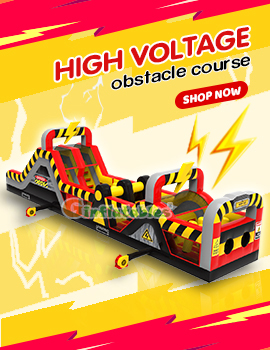
Interactive units — obstacle courses with halloween theming — work well for corporate events and teen-oriented programming where basic bouncing isn't enough to hold the audience. These tend to command the highest day rates but require more space and longer setup time, so factor that into your logistics model before adding them to a fleet.
For a core starter fleet, one combo unit and one or two standalone inflatable bouncers with Halloween graphics gives you coverage across different event sizes and budgets without overcommitting capital.
Marketing Your Halloween Rental Business
Halloween rental marketing is narrower than year-round marketing — you have a short window and a defined set of buyer types. Concentrate your effort rather than spreading it thin.
Target event decision-makers directly. School PTAs, corporate event coordinators, apartment community managers, and church event committees all make booking decisions in September and early October. Build a simple one-page pitch — what units you offer, service area, availability, and how to get a quote — and distribute it through email outreach, local Facebook groups for event planners, and direct contact with venue managers.
Use photos, not descriptions. The visual of a well-executed Halloween inflatable setup sells the rental immediately. If you're new and don't have event photos, shoot your units in a setup that mirrors a realistic event context. Parking lot photos with good lighting beat an empty showroom background.
Get on rental directories early. Sites like Thumbtack, GigSalad, and regional rental listing platforms index in local search. Set up profiles in August so they have time to build visibility before October inquiries peak.
Repeat client relationships compound. An event coordinator who books you for a corporate Halloween party and has a good experience will come back for the company summer picnic. Halloween is frequently the entry point into a longer rental relationship, so treat every seasonal booking as a full-season prospect.
Pricing Strategy for Seasonal Events
Halloween rental pricing should reflect three things: your cost basis, local market rates, and the seasonal premium the market will support.
Your cost basis includes equipment depreciation, insurance allocation, transportation, setup labor, and cleaning time. Understand this number before you set a rate — operating below cost while busy is worse than operating at low volume with healthy margins.
Local market rates are discoverable. Search your service area for existing bounce house rental operators, note their standard rates and what they charge for themed units. This tells you what buyers are accustomed to paying and where a Halloween premium is defensible.
Seasonal premium is real. October weekend demand exceeds supply in most markets, and event organizers expect to pay more for specialty inventory during peak periods. Price accordingly, but stay within a range that doesn't trigger the "I'll just skip it" response from budget-sensitive buyers like school committees.
For a structured approach to rental pricing models — including how to build tiered packages, handle deposits, and structure multi-unit discounts — the rental pricing framework guide provides a working methodology you can adapt to your market.
Minimum rental commitments and non-refundable deposits are standard practice for Halloween bookings. Given the concentrated demand window, a cancellation the week of Halloween is difficult to rebook. Build cancellation terms into every contract.
Scaling Beyond Halloween: Year-Round Potential
A Halloween operation built right is a scaffold for a fuller rental business. The infrastructure you put in place — business entity, insurance, licensing, equipment, client relationships — carries forward into other seasons with incremental investment.
The natural expansion path is themed inventory for other demand peaks: Christmas and winter holiday events (November–December), school year-end carnivals (May–June), and summer birthday season (June–August). Operators who start with Halloween often find it the least competitive entry point into their local market, and use that foothold to build the client base that supports year-round operations.
If your goal is a side business that generates strong seasonal returns without year-round operational overhead, a focused Halloween rental operation is one of the more defensible models in the inflatable rental space. The demand is real, the competition is thin in most markets, and the startup capital required for a two-to-three unit fleet is lower than most small business entry points.
Scheduling and Pricing the October Micro-Season
A Halloween bounce house side business lives or dies on four or five October weekends, so treat the calendar like the scarce inventory it is. Realistically you have the Saturdays and Sundays leading up to the 31st plus Halloween itself, and if Halloween lands midweek, the surrounding weekend absorbs most of the demand. Map every one of those dates before the season and decide how many deliveries one unit and one crew can physically turn in a day. Because the window is so short, a single weather washout can erase a fifth of your entire season, so build a rain-date policy and a clear rescheduling or deposit rule into every booking from the start.
Price for the season, not for a random summer Saturday. October demand for themed units is concentrated and time-sensitive, which supports premium weekend pricing and firm minimums, and the last weekend before Halloween is your peak-of-peak that should carry your highest rate. Require a deposit to hold a date, since October bookers commit early and no-shows on an irreplaceable weekend cost you the whole slot. Push weekday church fall festivals and school events at a slightly softer rate to fill the dead midweek days the weekend rush leaves empty.
Unit selection is what lets you charge the premium. A plain primary-color bouncer competes on price all year, but a themed or seasonally styled unit reads as a Halloween attraction and justifies the seasonal rate, especially for the fall festivals, trunk-or-treats, and neighborhood parties that drive October bookings. If you are buying one unit for a one-month side income, pick something that photographs well for the season and appeals to the church-and-community-event buyer, because that repeat organizer books early, pays the deposit without argument, and often rebooks you a year out.
Ready to Add This to Your Fleet?
Ginflatables builds commercial-grade inflatables to spec for rental operators and event businesses.