
Inflatables
Used Commercial Bounce Houses for Sale: What to Inspect Before You Buy
A used commercial bounce house can save you 40–60% off the new price. But it can also cost you double if you buy a unit with hidden damage, worn seams, or a material grade that won't survive another season.
The used inflatable market is growing as rental operators upgrade their fleets and offload older inventory. If you know what to look for — and what to walk away from — buying used is a legitimate way to build a rental fleet on a tighter budget.
Where to Find Used Commercial Bounce Houses
Used commercial inflatables show up in a few predictable places:
Operator liquidations. When rental companies close or downsize, they sell inventory in bulk. These are often the best deals — you can negotiate on multiple units and the seller wants them gone fast. Check local business classifieds and industry Facebook groups.
Fleet upgrades. Established operators regularly rotate out 3–4 year old units and replace them with newer models. These units still have usable life but may show cosmetic wear. Ask why the operator is selling — "upgrading" is a better answer than "too many repairs."
Online marketplaces. Facebook Marketplace, Craigslist, and dedicated inflatable resale groups are the most active channels. eBay occasionally has listings but shipping costs on a 300-lb unit make it impractical unless the seller is local.
Auction sites. Government surplus and business liquidation auctions sometimes include inflatable amusement equipment. Prices can be excellent, but you're buying as-is with limited inspection time.
The 10-Point Inspection Checklist
Never buy a used bounce house without physically inspecting it — inflated, not folded in a bag. Here's what to check:
1. Inflate it fully. Watch it for 15–20 minutes. A properly sealed commercial unit should hold shape with the blower running and show minimal deflection when you press on walls. If it needs constant blower adjustment or sags noticeably, there are leaks you can't see.
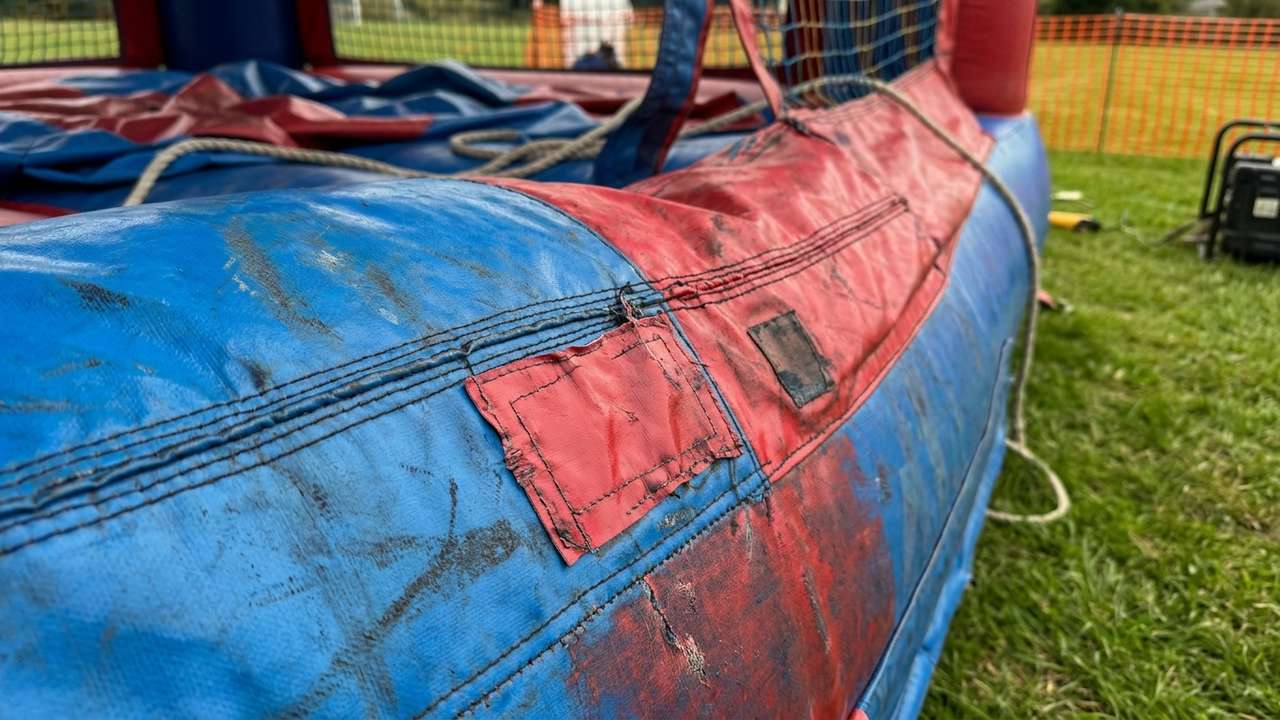
2. Check every seam. Run your hand along all heat-welded seams. Feel for separation, bubbling, or soft spots. Seam failure is the most expensive repair — and the most common reason operators dump units. Pay extra attention to floor-to-wall joints and the entrance arch.
3. Inspect the bounce floor. The floor takes the most punishment. Look for thin spots, patches, and discoloration. Get inside and bounce — a worn floor feels different underfoot. If the floor has more than two patches, the unit is near end-of-life.
4. Examine the slide surface (if applicable). Slides wear faster than bounce floors. Look for smooth or shiny PVC — that's friction wear. Check the landing zone for thinning. A worn slide surface is a friction burn liability.
5. Check the material grade. Ask for the original spec sheet or manufacturer name. Commercial-grade is 0.55mm PVC vinyl with heat-welded seams. If the unit is lighter than expected or has stitched (not welded) seams, it may be a residential unit sold as "commercial."
6. Look for mold and mildew. Unfold every crease. Mold appears as black or green spots, usually along the base and in rolled sections. Surface mold can be cleaned; mold that has penetrated the vinyl weakens the material and won't come out.
7. Test the zipper and deflation flaps. Zippers should operate smoothly. Deflation flaps should seal completely. Replacing a commercial zipper is one of the more expensive repairs — get a quote before assuming it's worth fixing.
8. Inspect the D-rings and anchor points. Pull on each D-ring firmly. They should be heat-welded to reinforced tabs, not just stitched to the base. Loose or torn anchor points are a safety disqualifier.
9. Check the blower port. The tube where the blower connects should be intact, properly fitted, and free of tears. A mismatched or damaged blower port causes air leaks that reduce bounce quality and overwork the blower.
10. Ask for rental history. A unit that did 200 rentals over 3 years has moderate wear. A unit that did 400 rentals in 2 years is near replacement. Rental count matters more than age.
How to Evaluate Used Pricing
Used commercial bounce houses typically sell for 40–60% below new retail, depending on age, condition, and the seller's urgency. Units in good condition — passing the 10-point inspection with only minor cosmetic wear — hold their value better. Units sold as-is or needing repairs trade at steeper discounts, but factor in the cost of patching, cleaning, and replacing worn anchor tabs before committing.
Prices vary widely by region, unit size, and market demand. Always compare against current new pricing from manufacturers before deciding — request a quote on new commercial units to benchmark what you're being offered on the used market.
Red Flags: When to Walk Away
Some deals aren't worth any price:
- Seller won't inflate it. There's always a reason. No inspection, no sale.
- Multiple floor patches. More than two significant floor repairs means the material is failing systemically, not just in one spot.
- Stitched seams on a "commercial" unit. It's residential-grade being mislabeled. Commercial PVC units have heat-welded seams — no exceptions from reputable manufacturers.
- Strong mildew smell when inflated. Deep mold means the unit was stored wet repeatedly. The structural integrity is compromised even if it looks acceptable.
- No manufacturer identification. If neither the seller nor the unit itself can tell you who made it, you have no way to verify material specs or source replacement parts.
- Price too good to be true. A commercial unit priced far below market value is almost certainly residential-grade, heavily damaged, or stolen. The market has established price floors — trust them.
Used vs New: When New Actually Saves Money
Buying used makes sense when you're testing the market or adding a backup unit. But in several scenarios, buying new from a reputable commercial manufacturer is the better investment:
- Primary revenue unit. Your main weekend earner should be reliable. A new unit with a manufacturer warranty eliminates the risk of a mid-season breakdown costing you bookings.
- Water-use inflatables. Used water slides and splash units deteriorate faster than dry bouncers. The PVC coating breaks down with repeated wet/dry cycles, and damage is harder to detect visually.
- Themed or specialty units. Popular themes (princess castles, tropical combos) command higher rental rates. Buying new lets you choose designs that match your market's demand rather than settling for whatever's available used.
- When the price gap is small. If the used price is only 30–40% below new, the savings buy you maybe one extra season of use — versus a brand-new unit with 3–5 seasons ahead of it and full warranty coverage.
For a detailed comparison of what separates commercial from residential construction — which matters even more when buying used — read our commercial vs residential bounce house guide. And if you're building your first fleet on a budget, our rental business startup guide covers how to balance new and used inventory strategically.
Ready to Add This to Your Fleet?
Ginflatables builds used commercial bounce houses to commercial-grade specs for rental operators and event businesses.
Get a QuoteWhatsApp