

Multi-activity inflatable funlands for commercial entertainment and rental operations
Inflatable funlands are large-scale play structures that combine multiple activity zones - bouncing, climbing, sliding, crawling, and obstacle elements - into a single inflatable unit. They serve as anchor attractions at events, indoor play centers, and family entertainment venues.
Why Funlands Outperform Single-Activity Units
A standalone bounce house keeps kids engaged for 10-15 minutes. A funland with multiple activity zones keeps them occupied for 30-45 minutes because there's always a new section to explore. For rental operators, that means higher perceived value and stronger rental rates per booking.
Funlands also reduce logistics. One delivery, one setup, one unit covers the entertainment for an entire event - instead of hauling and inflating three separate units.
Common Configurations
- Bounce + slide + climb: The standard three-zone funland. Sizes range from 20x20 ft compact models to 30x40 ft event-grade units.
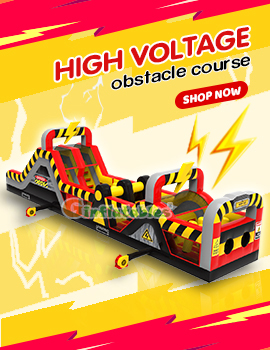
- Obstacle funland: Combines tunnel crawls, pop-up obstacles, and climbing walls with a slide finish. Popular for school events and corporate team building.
- Toddler funland: Low-height enclosed designs with soft obstacles, ball pit zones, and mini slides. Built for ages 2-6 with maximum visibility for parents.
Built for Commercial Use
Every funland in our catalog uses 18oz commercial PVC with heat-welded seams and reinforced stress points. Multiple blower ports ensure even inflation across all zones. Steel D-ring anchoring at 8+ points handles wind loads at outdoor events.
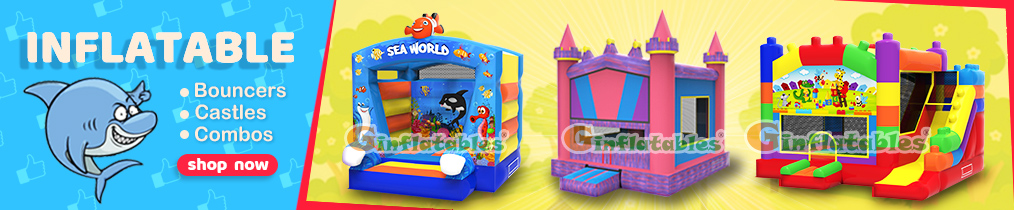
Browse our inflatable bouncers for simpler single-zone units, or explore obstacle courses for competition-focused layouts.
Indoor Play Center Applications
Inflatable funlands are the backbone of indoor family entertainment centers. A single funland replaces 3-4 individual inflatables while using less floor space and fewer blowers. Ensure ceiling clearance (16-20ft) and adequate HVAC capacity for blower heat.
Age Group Targeting
Separate zones by age for best results. Toddler zones (ages 2-5) feature low obstacles, ball pits, and mini slides. School-age zones (ages 6-12) include taller climbing walls and competitive elements. Read our toddler bounce house guide for age-appropriate specifications.
Fleet Strategy for Rental Operators
Pair a funland with interactive inflatable games for a complete event package. One funland plus two interactive games creates a full midway with just three units.
Funlands for Schools and Playgrounds
Inflatable funlands are increasingly used as portable playground alternatives for schools, PTAs, and after-school programs. A traditional commercial playground installation costs $30,000-$150,000 with permanent footings and a multi-month installation timeline. An inflatable funland covers equivalent play activity zones for a fraction of the cost, deploys in under an hour, and can be moved between campuses or stored off-season.
Specific applications in educational settings:
- Field day and PE events: Funlands provide structured physical activity for 50-200 students in a single session. Rotating groups through zones every 10-15 minutes maintains engagement and keeps lines manageable.
- After-school programs: Operators who supply funlands to after-school programs on monthly retainer build predictable recurring revenue.
- Playground renovation gaps: When a school removes aging equipment pending replacement, an inflatable funland fills the activity gap for months at a time with zero permanent modification to the site.
- Special event fundraisers: PTAs and booster organizations regularly rent large funlands for carnival-style fundraising events.
For slide configurations specifically suited to school-age children, see our guide on playground inflatable slides for commercial use, which covers age-appropriate height limits, safety surface requirements, and supervision ratios.
Indoor vs Outdoor Funland Deployment
Funlands work in both environments but require different planning for each.
Outdoor Deployment
Outdoor installations benefit from unrestricted ceiling height and natural ventilation for blower exhaust. The primary constraints are wind (stake at all anchor points; pause operation above 25mph), ground surface (flat grass or compacted dirt preferred), and power access (most funland configurations require two 20-amp circuits within 100ft of the setup area).
Indoor Deployment
Indoor venues unlock year-round operation. Key requirements:
- Ceiling height: 16ft minimum for compact funlands; 20-22ft for standard commercial units with full slides
- Flooring: Sealed concrete, rubber matting, or sport flooring - no carpet, which traps moisture under the PVC base
- Ventilation: Commercial blowers generate significant heat. HVAC must compensate to keep indoor temperature comfortable
- Electrical: Verify circuit capacity before booking; some venues have 15-amp circuits that cannot support commercial blowers reliably
Multi-Zone Playground Systems
Single-activity funlands attract families, but multi-zone inflatable playground systems keep them on-site longer and spending more. By connecting bounce areas, climbing walls, slides, and ball pits into one continuous structure, operators create a contained play environment where children move between zones without queuing for separate attractions. Average dwell time jumps from 20 minutes on a standalone bouncer to 45-60 minutes in a multi-zone system.
The key design principle is age separation. A well-planned inflatable playground system dedicates distinct zones for toddlers (2-5 years) and older children (6-12 years), with barrier walls and separate entry points. This reduces injury risk and lets parents relax, which drives repeat visits and positive reviews - both critical for indoor play centers and seasonal outdoor venues.
Capacity is the other major advantage. A 40 x 60 ft multi-zone system handles 30-40 children simultaneously, compared to 8-10 on a standard funland bouncer. That throughput difference directly impacts revenue per square foot. For a complete look at how connected playground zones are designed, sized, and priced for commercial venues, read our guide to inflatable playground systems.
Carnival Game Zones: Dunk Tanks and Velcro Walls
Funland operators increasingly build out dedicated carnival game zones alongside traditional bounce-and-slide attractions. Two formats anchor this category: dunk tanks and velcro walls. Both deliver high-throughput entertainment with strong spectator engagement - qualities that keep guests on-site longer and drive per-visit revenue up.
Commercial dunk tanks (steel-frame or inflatable PVC) are carnival staples that work across all demographics. They require water access and drain planning but reward operators with consistent booking demand from April through September. Inflatable versions at 80-150 lbs packed weight fit van-based operations, while steel tanks offer decade-long durability for fixed-location FECs. See our dunk tank buying guide for format comparisons and fleet integration strategy.
Velcro sticky walls add a high-energy competitive element to the funland mix. At 25-27 ft long × 15-18 ft tall, these units create visual spectacle as participants sprint, jump, and stick to the wall. The game processes 60-90 participants per hour with a single operator - a strong throughput rate for carnival environments. For construction specs, suit management, and venue requirements, read our velcro wall buyer's guide.
Indoor vs. Outdoor Deployment: What Operators Need to Know
Inflatable funlands are engineered for both indoor and outdoor environments, but each setting has specific setup requirements that affect unit selection and site planning. For outdoor deployments, ground anchoring via stake-down points or sandbag ballast keeps structures stable across varying terrain and wind conditions. Blowers vent freely, and weather covers protect against UV degradation during extended seasons.
Indoor venues introduce a different set of constraints. Ceiling clearance is the first number to confirm: most commercial funlands with integrated slides require a minimum of 18-22 feet of overhead clearance, measured to the lowest obstruction (beams, HVAC ducts, sprinkler heads). Units configured for low-ceiling spaces typically top out at 12-15 feet and are available in flatter layouts that prioritize floor-level activity zones. Ventilation is the other key variable - continuous blowers generate heat output, so an indoor facility needs adequate airflow to prevent the interior from becoming uncomfortably warm during peak attendance. For a detailed planning framework, see our indoor inflatable park guide.
Party Game Integration and Age-Zone Planning
A funland's modular layout makes it straightforward to build complete, age-differentiated event packages around a single structure. Operators running birthday parties, school events, or corporate family days typically configure three distinct zones within or adjacent to the main unit:
- Toddler section (2-5 years): Low-profile bounce area with soft walls, wide entry points, and minimal slide pitch. Keeps younger guests engaged without competing for space with older kids.
- Primary activity zone (6-12 years): The core bounce, climb, and slide circuit - the highest-traffic area during standard party bookings.
- Teen challenge area (12+ years): Obstacle runs, climbing walls, or integrated inflatable party games such as jousting platforms or interactive sport inflatables positioned alongside the main structure.
This tiered approach reduces supervision complexity, improves throughput per session, and increases perceived value for group bookings - all of which support higher per-head pricing and repeat business.
Venue and FEC Applications
Family entertainment centers, trampoline parks adding a soft-play zone, and seasonal indoor playgrounds represent the highest-volume commercial use case for multi-activity funlands. Unlike fixed playground installations, inflatable systems can be reconfigured or rotated seasonally, lowering the capital commitment for operators testing new attraction formats.
Pop-up indoor parks - temporary venues set up in warehouse or convention spaces for 4-12 week runs - rely almost exclusively on inflatable playground systems because they can be transported, installed, and removed without permanent structural modifications. For FEC operators, integrating a funland alongside laser tag, go-karts, or arcade zones creates a structured dwell-time anchor for families with mixed-age children, increasing average spend per visit.